Waterproof Flooring for Basements: A Toronto Homeowner's Complete Guide
HB Flooring Team
Installation Experts
Why Basement Flooring Fails — And How to Get It Right
Every year, thousands of Toronto homeowners invest in finishing their basements — and every year, a significant number of them learn an expensive lesson: the floor they chose wasn't right for below-grade installation.
Basements are fundamentally different from every other space in your home. They sit on concrete slabs that are in direct contact with the earth. They are inherently cold, prone to moisture transmission, and subject to humidity levels that fluctuate dramatically with Toronto's seasons. Installing the wrong flooring material — or worse, installing the right material over an improperly prepared subfloor — almost always ends in warping, mold, and a costly tear-out.
At HB Flooring, basement installations are one of our core specialties. This guide shares the professional installation knowledge we've developed across hundreds of Toronto basement projects.
Understanding Why Basements Are So Challenging
Before choosing a flooring material, you need to understand the three forces working against you in every below-grade space:
1. Concrete Moisture Transmission
Your basement concrete slab is not waterproof — it is porous. Even when your basement looks and feels dry, moisture is constantly migrating upward through the concrete from the soil beneath. This process, called "moisture vapor transmission," is invisible and continuous. In Toronto, where the water table can be surprisingly high (especially in areas near the lake, ravines, or rivers), this moisture load can be significant.
2. Temperature Differentials
Toronto's climate swings from -20°C in January to +35°C in July. Your basement sits partially underground, buffered from these extremes but still affected. The temperature differential between the cold concrete slab and the warm, heated air above creates condensation — another source of moisture that gets trapped beneath improperly installed flooring.
3. Flood and Leak Risk
According to the City of Toronto, basement flooding is the most common type of residential water damage claim. Whether from a failed sump pump, a backed-up floor drain, a burst water heater, or spring runoff, your basement flooring needs to survive contact with standing water.
Rule #1: Never Install Solid Hardwood Below Grade
This cannot be stated emphatically enough: solid hardwood has no place in a basement. Real wood is hygroscopic — it absorbs and releases moisture from the surrounding environment. In a basement, this means:
- The wood will absorb moisture from the concrete, causing cupping (edges curl upward) and buckling.
- Seasonal humidity swings will cause expansion and contraction, opening gaps between planks in winter and creating pressure ridges in summer.
- Trapped moisture beneath the planks creates ideal conditions for mold and mildew growth.
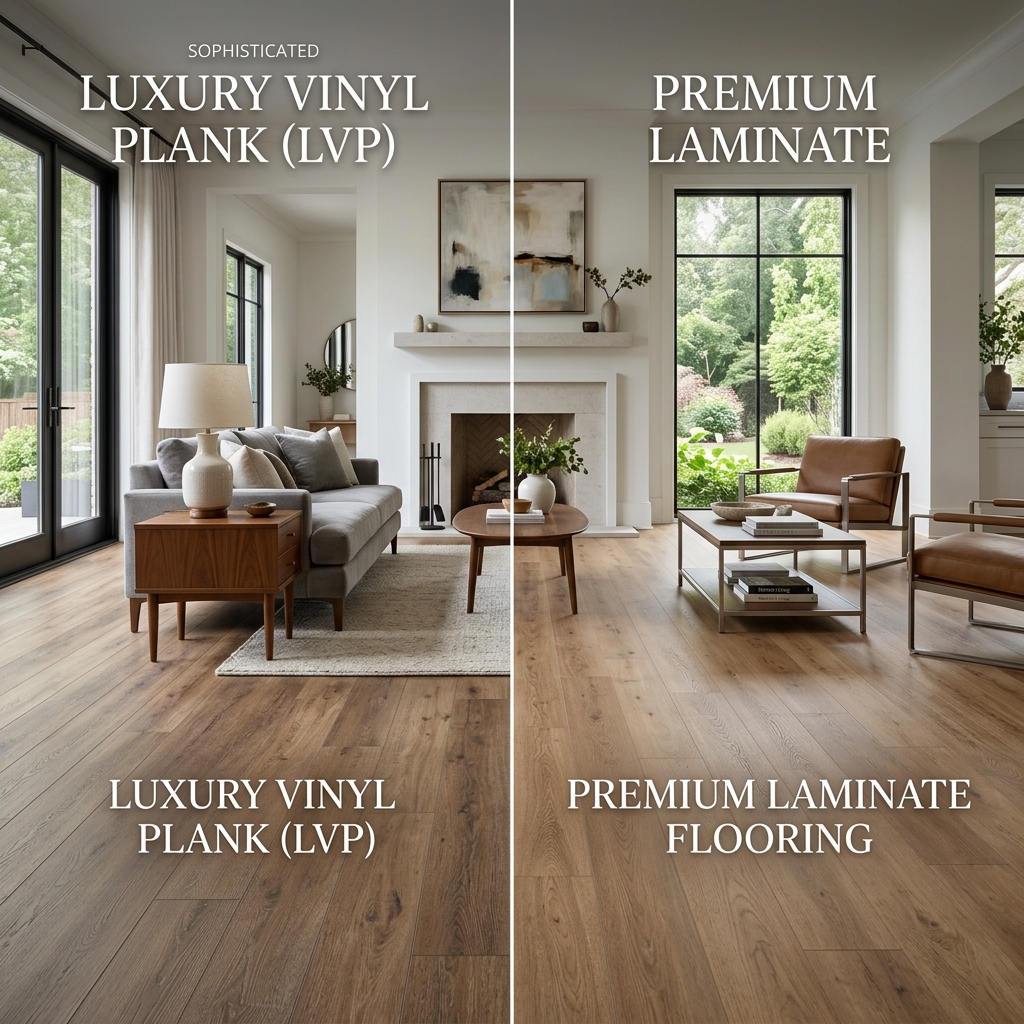
Standard laminate is also risky. While modern "waterproof" laminates are more resistant than older products, their HDF (High-Density Fiberboard) cores will still swell irreversibly if exposed to sustained moisture — and in a basement, that exposure is almost inevitable over time.
The Best Basement Flooring: Luxury Vinyl Plank (LVP)
Vinyl Plank flooring was essentially engineered for below-grade environments. Here's why it dominates basement installations across the GTA:
- 100% waterproof: Every layer — from the wear surface to the rigid core to the backing — is completely synthetic. Water cannot damage it. Period.
- Dimensionally stable: Unlike wood, LVP does not expand or contract meaningfully with humidity changes. It lays flat and stays flat.
- Comfortable underfoot: Premium LVP with an attached cork or IXPE foam pad provides thermal insulation against cold concrete and a softer walking surface than bare slab.
- Flood recoverable: If your basement floods, LVP can be pulled up, the concrete dried, and the same planks reinstalled — assuming the water wasn't contaminated. Try that with hardwood or carpet.
What to Look for in Basement LVP
Not all LVP is created equal. For Toronto basements, we specifically recommend:
- Rigid core (SPC or WPC): SPC (Stone Polymer Composite) is the most dimensionally stable option. WPC (Wood Polymer Composite) is slightly softer and warmer underfoot.
- Attached pad: Look for products with an integrated cork or IXPE foam underlayment. This eliminates the need for a separate underlayment and provides built-in thermal and acoustic insulation.
- 20+ mil wear layer: Basements often become playrooms, home gyms, or entertainment spaces. A thick wear layer ensures the floor holds up to heavy furniture, exercise equipment, and foot traffic.
- Minimum 5mm total thickness: Thicker planks feel more substantial underfoot and bridge minor subfloor imperfections better.
Subfloor Preparation: The Step Most Installers Skip
A waterproof floor is only as good as what's beneath it. At HB Flooring, subfloor preparation accounts for a significant portion of every basement installation — and it's the step that separates professional results from DIY disasters.
Step 1: Moisture Testing
Before any material enters the basement, we test the concrete slab's moisture emission rate using either a calcium chloride test (measuring moisture vapor emission rate, or MVER) or a relative humidity probe (the more accurate method). Most LVP manufacturers require MVER below 3-5 lbs per 1,000 sq ft per 24 hours, or RH below 75-80%.
If your slab exceeds these limits, we address the issue before installation — not after. Solutions include:
- Applying a moisture-mitigating epoxy primer to the concrete surface
- Installing a dimpled membrane subfloor system that creates an air gap
- Addressing external drainage issues (weeping tile, grading, etc.)
Step 2: Leveling
Basement concrete slabs are rarely flat. They are poured to slope toward floor drains, and they settle unevenly over decades. Rigid core LVP requires a flat surface — typically no more than 3/16" variance over a 10-foot span — or the click-lock joints will separate and fail over time.
We use self-leveling cement compounds to fill low spots and grind down high spots. In older Toronto homes (especially pre-1970s foundations), this step is almost always necessary and should be factored into your project budget.
Step 3: Vapor Barrier Installation
Even with 100% waterproof LVP, a vapor barrier is essential in basement applications. Without one, moisture migrating through the concrete gets trapped beneath the planks, creating a humid microenvironment where mold thrives.
We use 6-mil polyethylene sheeting, overlapping seams by at least 6 inches and sealing with moisture-resistant tape. If using LVP with an attached pad, the pad often serves as the vapor barrier — but only if the manufacturer explicitly states this. Don't assume.
Mold Prevention: The Hidden Threat
Mold is the silent destroyer of basement renovations. It thrives in dark, damp environments with organic food sources (like wood, paper, or carpet backing). Here's how we prevent it:
- No organic underlayment: Never use felt or paper-based underlayment in a basement. Cork is acceptable only if the slab moisture tests pass.
- Proper vapor barrier: As described above — this prevents moisture from being trapped in the mold-friendly zone between slab and flooring.
- Dehumidification: We recommend Toronto homeowners maintain basement humidity below 50% year-round. A quality dehumidifier is not optional — it's essential.
- Avoid carpet at all costs: Carpet in a basement is a mold factory. The backing absorbs moisture from the slab, creating a perpetually damp environment hidden from view. If you want soft flooring in a basement playroom, use area rugs over LVP — they can be washed or replaced.
Other Basement Flooring Options
Porcelain Tile
Tile is 100% waterproof and incredibly durable, but it has significant drawbacks in basements:
- Extremely cold underfoot without radiant floor heating (a significant additional expense)
- Very hard — uncomfortable for long periods of standing or for children playing
- Grout lines can harbour mold if not properly sealed and maintained
- Installation cost is typically 2-3x higher than LVP
Engineered Hardwood (With Caution)
Some engineered hardwood products are rated for below-grade installation, but we only recommend this if moisture testing confirms a very dry slab AND the homeowner commits to maintaining consistent humidity with a dehumidifier. Even then, vinyl plank flooring is the safer choice for most Toronto basements.
Toronto-Specific Basement Considerations
- Heritage homes (pre-1950s): Many older Toronto homes have stone or rubble foundations with no modern moisture barrier. These basements require extra preparation — often a dimpled membrane system — before any finished flooring.
- Condo lockers/storage: Some Toronto condo owners are finishing their locker or parking-level storage spaces. Building code and condo board regulations must be reviewed before proceeding.
- Sump pump zones: If your basement has a sump pump, plan your flooring layout to maintain easy access to the sump pit. We always install removable access panels in these areas.
- Floor drain clearance: Toronto building code requires maintaining access to basement floor drains. Your flooring installation must accommodate these with proper transitions.
Transform Your Basement with Confidence
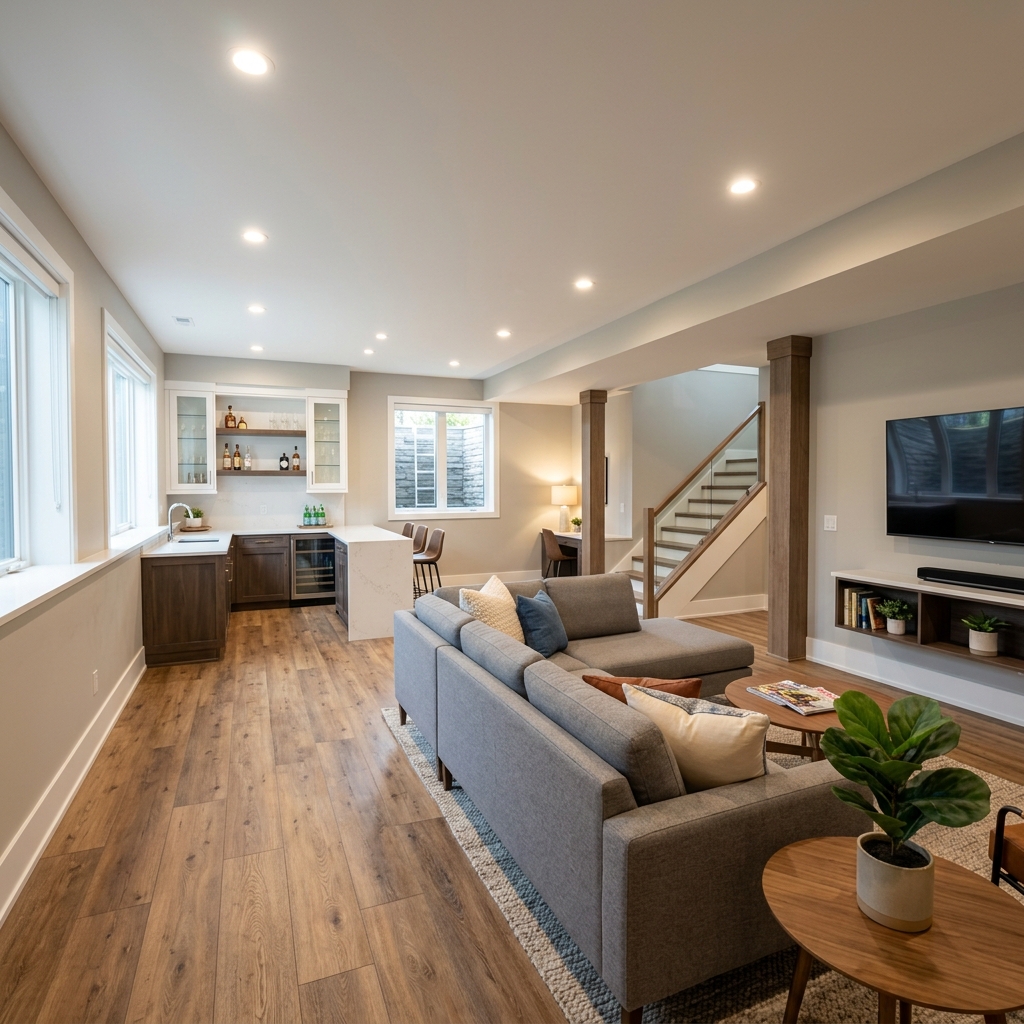
A properly installed basement floor transforms dead space into valuable living area — home theatres, playrooms, home offices, guest suites. But cutting corners on moisture management is a recipe for mold, warping, and wasted money.
HB Flooring specializes in Toronto basement installations done right. We moisture-test every slab, level every surface, and install proper vapor barriers before a single plank goes down. Book your free basement consultation and let us show you how to do it properly the first time.
Ready to Upgrade Your Floors?
Get a free, no-obligation quote. Our experts will come to your home, take precise measurements, and bring samples right to your door.
Share this article
About HB Flooring
Toronto's premier flooring installation experts. Specializing in luxury vinyl plank, laminate, and hardwood for over 15 years.
Contact our team →